Introduction
Cleaning your car engine is not just about aesthetics—it also helps maintain performance, prevents corrosion, and makes spotting leaks easier. However, many car owners hesitate because they fear causing damage to sensitive components. The good news is that cleaning a car engine safely is achievable with the right approach, tools, and precautions. This guide walks you through the safest methods to keep your engine bay clean without risking electrical or mechanical damage.
Why You Should Clean Your Car Engine
Improve Engine Performance
A clean engine allows heat to dissipate efficiently and prevents grime buildup that can affect moving parts. By keeping hoses and belts clean, you reduce the chance of wear and tear.
Make Maintenance Easier
Cleaning your engine helps you spot leaks, cracks, and corrosion early. When your engine is covered in grease and dirt, minor issues can go unnoticed until they become major repairs.
Enhance Vehicle Value
A well-maintained engine bay is attractive to potential buyers. It signals that the car has been cared for, which can increase resale value.
Tools and Materials Needed
Before you start, gather the right tools to clean your car engine safely:
- Protective gloves and goggles
- Plastic bags or aluminum foil to cover sensitive parts
- Soft brushes and microfiber cloths
- Degreaser or engine cleaner (non-corrosive)
- Garden hose or pressure washer (with adjustable low pressure)
- Compressed air (optional, for drying)
Guide to Cleaning Your Car Engine
Prepare Your Engine Bay
Remove Loose Debris
Use a brush or vacuum to remove leaves, dirt, and dust. This reduces the chance of debris getting trapped in hoses or electrical components during cleaning.
Protect Sensitive Parts
Cover the battery, alternator, exposed wiring, and air intake with plastic bags or aluminum foil. This prevents water from entering sensitive areas and causing short circuits.
Choose the Right Cleaner
Select a Safe Degreaser
Use a non-corrosive, engine-safe degreaser. Avoid household cleaners like bleach or ammonia, which can damage rubber and plastic components.
Dilute if Necessary
Follow the product instructions. Some degreasers are concentrated and require dilution with water. Applying a too-strong chemical can harm seals or coatings.
Apply Cleaner Carefully
Spray Evenly
Lightly spray the degreaser on greasy areas, avoiding sensitive parts. Let it sit for 5–10 minutes to break down oil and grime.
Agitate Stubborn Spots
Use a soft-bristle brush to scrub stubborn grease gently. Avoid wire brushes, as they can scratch metal surfaces or damage wiring insulation.
Rinse Safely
Low-Pressure Rinsing
Rinse the engine with a garden hose or low-pressure washer. High-pressure water can force moisture into sensitive electrical components and cause damage.
Avoid Direct Sprays
Never spray directly on the alternator, battery, or air intake. Keep water flow indirect, focusing on open areas with grease or dirt.
Dry Thoroughly
Remove Protective Covers
Carefully remove any plastic bags or foil covering sensitive components.
Use Compressed Air or Cloth
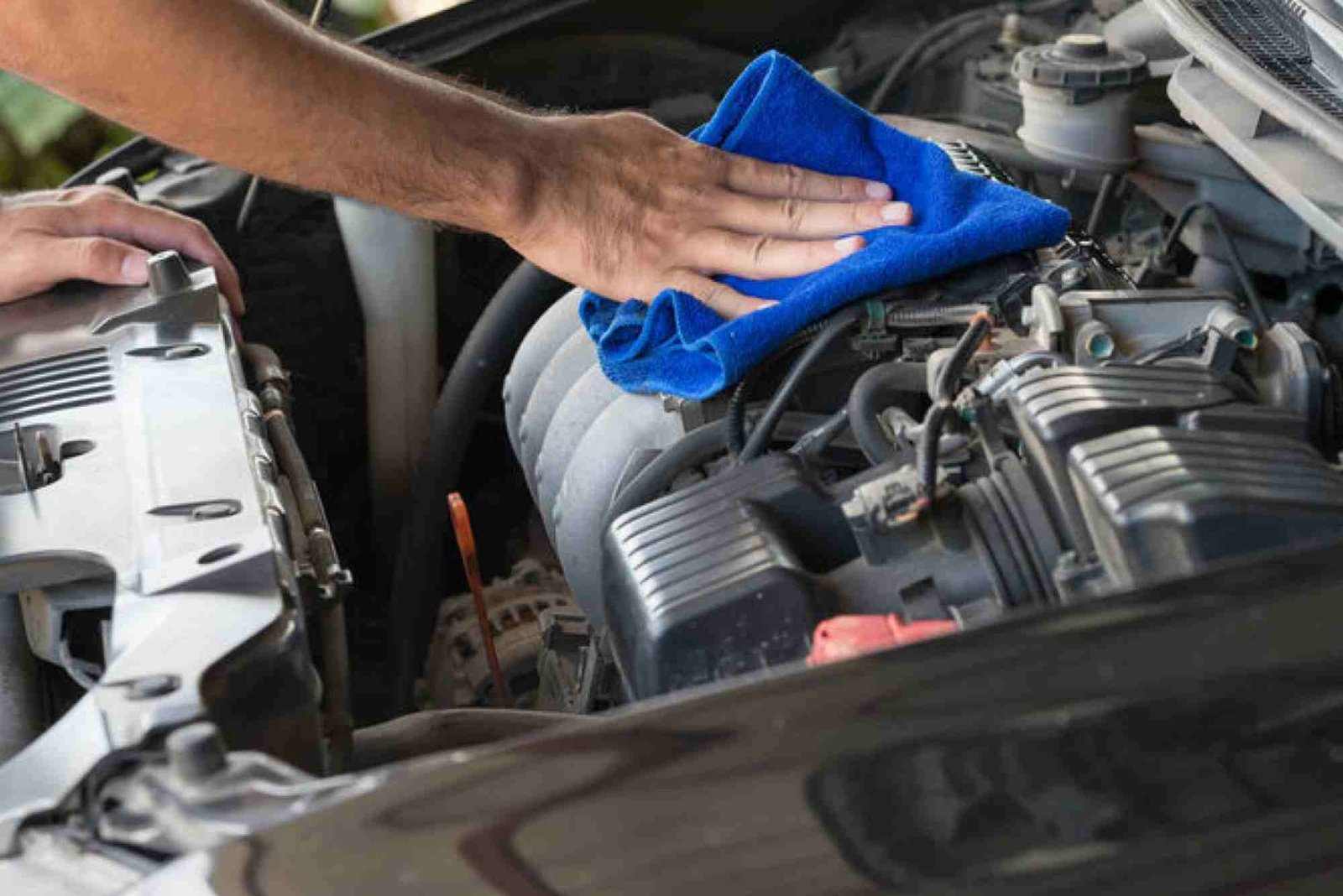
Blow off water with compressed air, or wipe the engine bay with microfiber cloths. Make sure all crevices are dry to prevent corrosion or electrical issues.
Let the Engine Dry
Allow your engine to air dry for 30–60 minutes before starting the car. Never start the engine while water is trapped around electrical parts.
Apply Engine Protectant
Applying a silicone-based engine protectant can help prevent dust accumulation and give your engine bay a polished look. Spray lightly and wipe off excess.
Tips for Maintaining a Clean Engine
- Regular Dusting: Use a soft brush to remove surface dust monthly.
- Check for Leaks: A clean engine helps detect oil or coolant leaks early.
- Avoid Harsh Chemicals: Stick to car-specific degreasers for safety.
- Engine Heat: Clean only when the engine is cool to prevent burns or chemical reactions.
FAQs
How often should I clean my car engine?
Cleaning every 6–12 months is sufficient for most cars, but inspect your engine bay regularly for grease and debris.
Can I use a pressure washer to clean my engine?
Yes, but use low pressure and avoid spraying directly on electrical components, battery, or air intake.
Is it safe to use degreaser on a hot engine?
No. Always clean a cool engine to prevent burns and avoid chemical reactions that can damage parts.
Will cleaning my engine improve fuel efficiency?
Indirectly. While cleaning alone doesn’t boost fuel efficiency, removing debris and keeping components in good condition can help the engine run more efficiently.
Can I do it myself, or should I hire a professional?
Many car owners can safely clean their engines with proper precautions. However, for complex or newer cars with delicate electronics, a professional might be safer.
Cleaning your car engine safely is not just about making it look good—it’s about preserving performance, detecting issues early, and maintaining your car’s value. With the right tools, techniques, and precautions, anyone can clean a car engine safely without risking damage. Start with gentle cleaning, protect sensitive parts, and follow our step-by-step guide for a spotless and well-maintained engine bay.
The Secret to Maintaining a Car Engine to Keep It Powerful: Maintaining a car engine starts with regular oil changes, as fresh oil reduces friction and prevents wear. Checking coolant levels, air filters, and spark plugs ensures the engine runs efficiently. Avoiding harsh driving, keeping belts and hoses in good condition, and using quality fuel also prolong engine life. Routine inspections help detect issues early, keeping your engine powerful and reliable.