Introduction
The development of automation technology in industry has been one of the most transformative forces shaping modern manufacturing and services. From the early days of simple mechanization to today’s advanced artificial intelligence–driven systems, automation has redefined productivity, quality, and competitiveness. Whether you’re a student learning about industrial evolution, a manager evaluating technology investments, or a curious reader exploring future trends, understanding how automation has developed helps explain where industry is headed next.
In this article, we’ll take a comprehensive look at the history, key technologies, business impacts, challenges, and future outlook of automation. We’ll also address common questions people ask about automation’s effect on jobs, the economy, and workplace safety.
Historical Evolution of Automation Technology
Understanding the development of automation technology in industry starts with history. This evolution didn’t happen overnight — it emerged in stages that reflect advances in engineering, computing, and connectivity.
Early Mechanical Automation
The roots of automation go back centuries. Early examples include water wheels and simple mechanical tools designed to reduce manual effort. However, it was the Industrial Revolution in the late 18th and early 19th centuries that marked the first major wave of industrial automation. Steam engines, textile machines, and early machine tools increased output and standardized production in ways never seen before.
The Rise of Electrical and Electronic Control
In the early 20th century, electrical power systems and later electronic control equipment enabled more precise and reliable automation. The introduction of assembly lines — most famously at Ford Motor Company — demonstrated how automation could dramatically reduce production time and costs. This period also saw the invention of feedback control systems, where machines could adjust their behavior based on real‑time measurements, a foundational idea for modern automation.
Computerization and Programmable Logic Controllers
The development of digital computers in the mid‑20th century revolutionized automation. Programmable Logic Controllers (PLCs) emerged in the 1960s and became essential for controlling manufacturing equipment. Suddenly, engineers could program sequences of operations instead of relying on mechanical cams and relays.

This era marked a shift from fixed automation to flexible automation — systems that could be reprogrammed to produce different products without rebuilding the entire machine.
Networked Systems and the Internet of Things
By the late 20th and early 21st centuries, automation extended beyond individual machines to entire production systems connected by networks. The rise of the Internet of Things (IoT) allowed machines to communicate, share data, and be monitored remotely. This connectivity enabled the birth of smart factories, where data and automation work together to optimize production in real time.
AI and Machine Learning in Modern Automation
Today, the latest phase in the development of automation technology in industry involves artificial intelligence (AI). Machine learning models can analyze massive datasets from sensors and operations, identifying patterns humans might miss. AI‑powered automation enables predictive maintenance, automated quality inspection, adaptive scheduling, and even autonomous robots that can learn tasks by observation.
Core Technologies Driving Industrial Automation
To appreciate how automation is transforming industry, it helps to understand the key technologies involved.
Robotics and Autonomous Machines
Industrial robots are perhaps the most visible form of automation. Used in assembly, welding, painting, and packaging, robots can work with precision and endurance unmatched by humans. Newer generations of robots — sometimes called cobots — are designed to work safely alongside human operators, expanding automation into areas once considered too delicate or unpredictable.
Sensors and Smart Devices
Sensors are the eyes and ears of automated systems. They measure temperature, pressure, position, and other variables crucial for control systems. In connected environments, these sensors feed data to centralized platforms that optimize performance and detect problems before they lead to downtime.
Industrial Software and Analytics
Automation software ranges from basic control programs to complex analytics platforms that use AI. Supervisory Control and Data Acquisition (SCADA) systems, Manufacturing Execution Systems (MES), and Enterprise Resource Planning (ERP) systems work together to provide visibility and control across entire operations.
Data analytics helps companies make sense of information collected from machines and processes. When combined with automation, analytics can lead to smarter decisions and continuous improvement.
Additive Manufacturing (3D Printing)
Although not automation in the traditional sense, additive manufacturing plays a growing role in automated production. 3D printers can produce complex parts with minimal human intervention, and when integrated with automation systems, they enable rapid prototyping and on‑demand manufacturing.
Business Impacts of Automation
The development of automation technology in industry has far‑reaching effects — from cost savings to workplace safety.
Productivity and Efficiency Gains
Automation enhances productivity by reducing cycle times and increasing throughput. Machines don’t tire, and they can operate around the clock with predictable performance. For many industries, these efficiency gains translate into lower production costs and faster time‑to‑market.
Quality and Consistency
Automated systems improve quality by performing tasks with high precision and repeatability. This reduces defects and waste, contributing to stronger brand reputation and customer satisfaction.
Workplace Safety
Automation often takes over dangerous tasks, reducing the risk of injury. For instance, heavy lifting, exposure to harmful chemicals, and repetitive motion tasks are frequently automated, improving workplace safety and employee wellbeing.
Workforce Transformation
One of the most discussed impacts of automation is the effect on jobs. While automation can displace routine and manual tasks, it also creates demand for new roles — such as automation engineers, data analysts, and maintenance technicians. Reskilling and workforce development programs are essential to help workers transition into these emerging opportunities.
Challenges and Considerations
While the benefits of automation are clear, the development of automation technology in industry also introduces challenges that businesses and policymakers must navigate.
High Initial Investment
Automation technologies often require substantial upfront investment in equipment, software, and training. For small and medium‑sized enterprises (SMEs), these costs can be a barrier to adoption. However, many organizations view these expenses as long‑term investments that pay off through improved competitiveness.
Integration Complexity
Integrating new automation systems with existing infrastructure can be technically complex. Companies may face compatibility issues, cybersecurity concerns, and the need for specialized expertise during implementation.
Cybersecurity and Data Privacy
As automation systems become more connected, they also become vulnerable to cyber threats. Protecting industrial networks and data requires robust cybersecurity strategies, regular updates, and employee awareness training.
Ethical and Social Implications
Automation raises important ethical questions. For example, how should societies balance efficiency with employment? What protections should be in place for workers whose roles are affected by automation? Addressing these questions requires input from business leaders, governments, and communities.
Real‑World Examples of Automation in Industry
The development of automation technology in industry is not abstract — it’s happening right now across many sectors.
Automotive Manufacturing
Automotive plants are among the most automated facilities in the world. Robots handle welding, painting, and assembly tasks with precision. Connected data systems monitor performance and help manufacturers respond quickly to production issues.
Food and Beverage Production
Automation in food processing includes automated mixing, packaging, and quality inspection. Sensors and machine vision systems ensure products meet hygiene and safety standards.
Electronics and Semiconductor Fabrication
In electronics manufacturing, automation plays a vital role in assembling tiny components with extreme precision. Automated testing and inspection enable manufacturers to maintain high yields and reliability.
Logistics and Warehousing
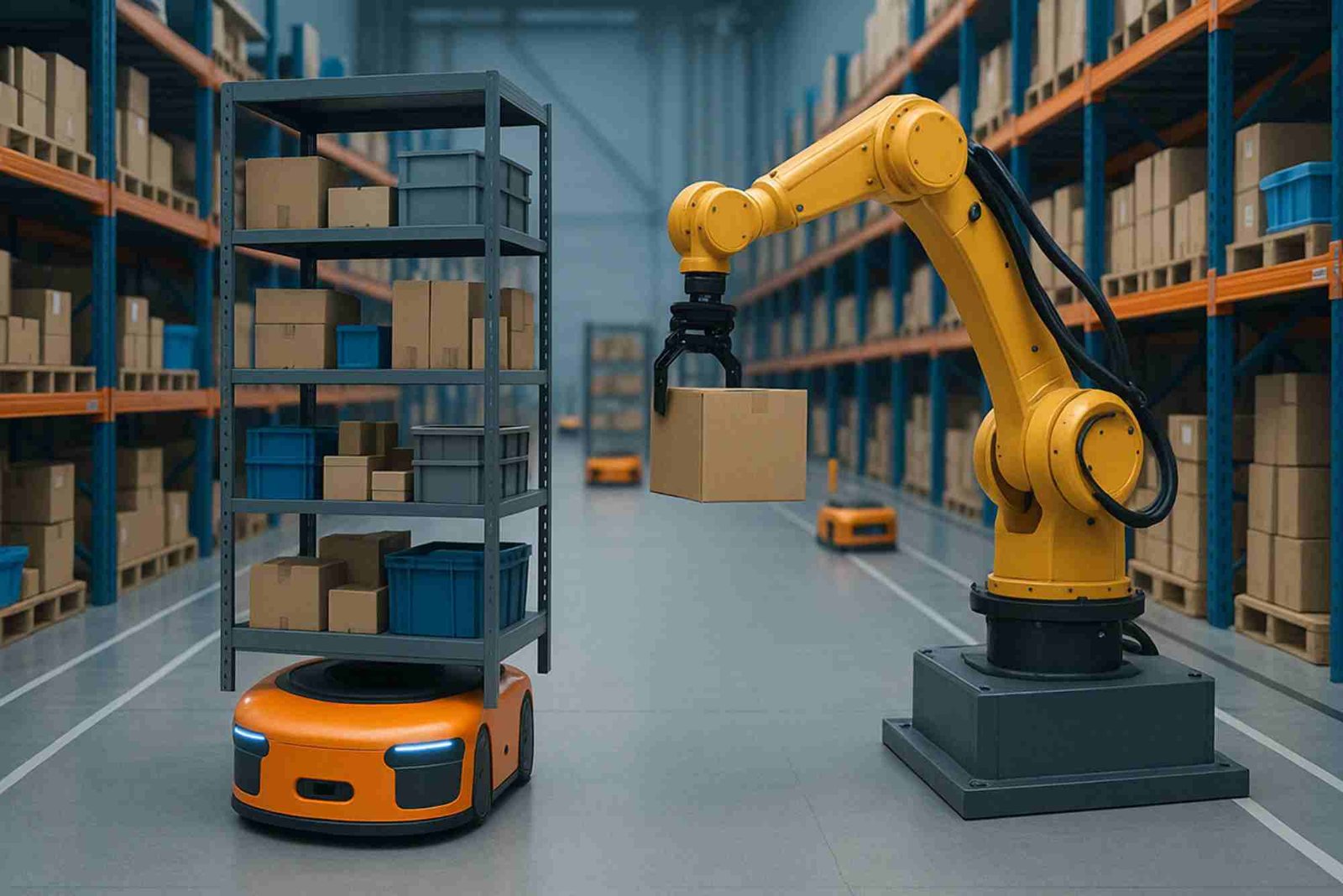
Automated guided vehicles (AGVs) and robotic pickers are transforming warehouses. These machines work alongside humans to boost throughput, reduce errors, and support just‑in‑time delivery models.
The Future of Industrial Automation
Looking ahead, the development of automation technology in industry will continue to accelerate and evolve.
AI‑Driven Decision Making
Machine learning and AI will increasingly guide strategic decisions, predictive maintenance schedules, and adaptive manufacturing processes. This evolution moves automation from task execution to intelligent optimization.
Human‑Machine Collaboration
Instead of replacing humans, many future automation systems will focus on collaboration. Augmented reality (AR), wearable technologies, and intuitive human interfaces will enhance how people work with automated systems.
Sustainable Automation
Sustainability is becoming a priority in automation. Energy‑efficient machines, smart power management, and waste‑reducing processes will help companies meet environmental goals while improving operational performance.
Global Access and Democratization
As technology becomes more affordable and accessible, automation will no longer be limited to large corporations. Startups and SMEs will adopt automation tools, creating a more competitive and innovative industrial landscape.
FAQs
What is automation technology in industry?
Automation technology refers to systems and machines designed to perform tasks with minimal human intervention, often using robotics, sensors, and software.
What are the benefits of industrial automation?
Key benefits include higher productivity, improved quality, enhanced safety, and cost savings over time.
Will automation replace jobs in the future?
While automation may replace some routine tasks, it also creates new roles and opportunities. Workforce reskilling and education are important parts of this transition.
How does automation affect manufacturing quality?
Automation improves quality by reducing human error, enabling precise control, and ensuring consistent processes across production lines.
What industries use automation technology?
Automation is widely used in automotive, electronics, food processing, logistics, pharmaceuticals, and many other sectors.
The development of automation technology in industry reflects a long journey of innovation, from simple mechanical devices to intelligent, connected systems capable of transforming entire value chains. As automation continues to evolve, companies that embrace these technologies responsibly will gain competitive advantage, drive efficiency, and unlock new business opportunities.
Automation doesn’t signal the end of human contribution — it redefines it. The future of industry belongs to human ingenuity powered by intelligent machines.
The Impact of 5G Technology on Daily Life: 5G technology is transforming daily life by enabling faster internet, seamless streaming, and real-time communication. It powers smart homes, autonomous vehicles, and advanced healthcare applications. With lower latency and higher connectivity, 5G enhances productivity, entertainment, and access to information, making everyday tasks more efficient and connected.