Introduction
In the age of instant communication and global connectivity, understanding how modern satellite technology works is essential. Satellites are no longer just tools for space exploration; they are integral to everyday life. From enabling GPS navigation to supporting global internet coverage, modern satellites play a critical role in connecting the world. This article explains the fundamentals of satellite technology, how it operates, and why it has become indispensable in modern society.
The Basics of Satellite Technology
Satellites are objects launched into orbit around Earth or other celestial bodies to perform specific tasks. They range from small CubeSats used for scientific experiments to massive geostationary communication satellites. The design and purpose of a satellite determine its structure, power system, and communication capabilities. At its core, a satellite must overcome Earth’s gravity, maintain orbit, and transmit or receive data efficiently.
Satellites operate in different orbits, such as low Earth orbit (LEO), medium Earth orbit (MEO), and geostationary orbit (GEO). Each orbit serves a unique purpose. LEO satellites orbit between 160 to 2,000 kilometers above Earth and are commonly used for Earth observation and telecommunications. MEO satellites, often used for navigation, orbit at heights of 2,000 to 35,000 kilometers. GEO satellites hover around 36,000 kilometers above the equator, maintaining a fixed position relative to Earth’s surface, ideal for communication and weather monitoring.
Core Components of Modern Satellites
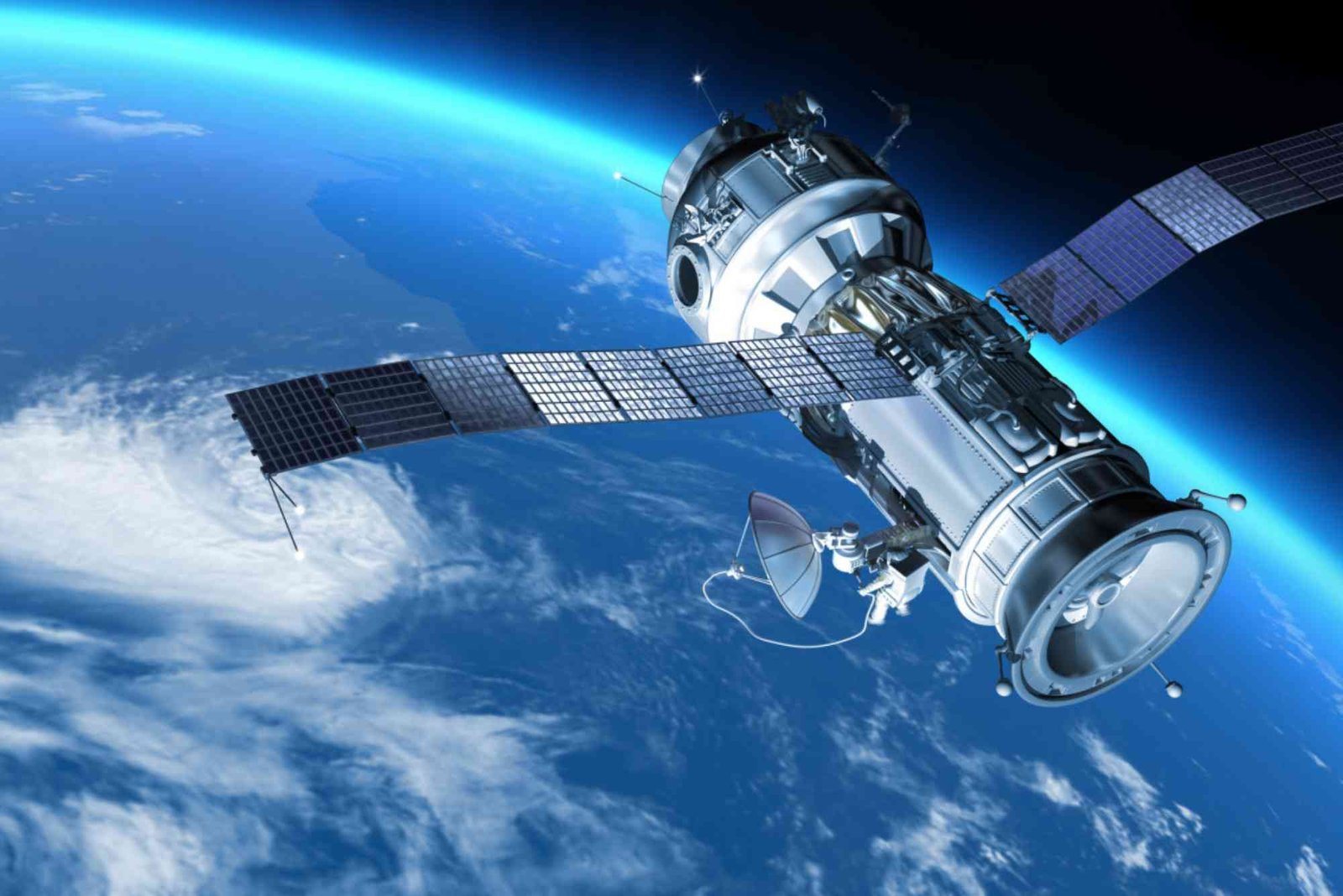
Modern satellites consist of several essential components that enable them to function effectively in space.
Power Systems
Power is critical for satellites, and most rely on solar panels to generate electricity. Solar arrays convert sunlight into energy, which charges onboard batteries to keep the satellite operational during periods without sunlight. Efficient power management ensures that communication, propulsion, and sensor systems continue to function reliably.
Communication Systems
Communication systems allow satellites to transmit data to ground stations or other satellites. High-frequency radio waves, such as those in the X-band or Ka-band, are commonly used for data transfer. Advanced satellites often include multiple transponders to handle large volumes of information simultaneously.

Propulsion and Control
Satellites need propulsion systems to maintain their orbit and correct trajectory errors caused by gravitational forces or space debris. Modern satellites use chemical thrusters or electric propulsion systems. Attitude control systems, including gyroscopes and reaction wheels, keep satellites oriented correctly to point antennas or cameras in the right direction.
Sensors and Payloads
The payload is the heart of the satellite, performing the mission-specific tasks. Observation satellites carry cameras and radar sensors for imaging Earth. Communication satellites carry transponders for voice, video, and data signals. Scientific satellites may have instruments to measure atmospheric conditions, cosmic radiation, or magnetic fields.
How Satellites Transmit Data
One of the most remarkable aspects of satellite technology is the ability to transmit data across vast distances. Data collected by the satellite’s sensors are converted into electromagnetic signals. These signals are then sent to ground stations using high-frequency radio waves. The ground stations process the signals into usable information, such as images, weather forecasts, or GPS coordinates.
Satellites can also communicate with other satellites in space, forming networks called constellations. This inter-satellite communication allows for faster data transmission and global coverage, especially in low Earth orbit constellations like Starlink.
Advancements in Satellite Technology
Modern satellite technology has evolved rapidly, bringing new capabilities and applications.
Miniaturization and CubeSats
Satellites have become smaller and more affordable thanks to miniaturization. CubeSats, which are small modular satellites, can be launched in clusters to perform complex missions. Despite their small size, CubeSats can carry cameras, communication equipment, and scientific instruments, making space more accessible than ever.
High-Resolution Imaging
Modern observation satellites provide high-resolution images of Earth, with some capable of capturing details as small as 30 centimeters. These images are used for mapping, agriculture, disaster management, and environmental monitoring. The increased clarity helps scientists and governments make informed decisions quickly.
Global Connectivity
Satellite internet has revolutionized communication in remote areas where terrestrial infrastructure is limited. By deploying satellite constellations in low Earth orbit, companies provide high-speed internet to regions that were previously disconnected. This technology is crucial for education, healthcare, and business development in underserved areas.
Artificial Intelligence Integration
Artificial intelligence (AI) is being integrated into satellite operations to enhance efficiency. AI algorithms can analyze vast amounts of data onboard, reducing the need to send raw data to Earth. AI can also optimize satellite constellations, predict equipment failures, and improve navigation systems.
Applications of Modern Satellites
The applications of satellites are vast and continue to expand as technology advances.
Communication
Satellites enable global communication networks, from broadcasting television signals to providing internet access. They bridge geographical barriers and allow instant connectivity worldwide.
Navigation and GPS
Global navigation satellite systems (GNSS), such as GPS, rely on satellites to provide precise location and timing information. These systems are essential for transportation, aviation, maritime navigation, and even smartphone applications.
Earth Observation
Earth observation satellites monitor environmental changes, track weather patterns, and assess natural disasters. They help predict hurricanes, monitor deforestation, and manage resources more effectively.
Scientific Research
Satellites in space also conduct scientific research, studying phenomena like cosmic radiation, climate change, and space weather. Space telescopes, like the Hubble Space Telescope, have expanded our understanding of the universe.
Military and Security
Satellites provide critical support for national security. They assist with reconnaissance, surveillance, and communication for defense operations. Advanced satellites also support missile detection and early warning systems.
Challenges in Satellite Technology
While satellite technology has advanced, it also faces significant challenges. Space debris poses a growing threat, as collisions can damage operational satellites. Maintaining satellites in orbit requires precise calculations and constant monitoring. Launch costs, though decreasing, remain substantial, limiting access for smaller organizations. Cybersecurity is another concern, as satellites transmitting sensitive data are potential targets for hacking.
The Future of Satellite Technology
The future of satellite technology promises more innovation and accessibility. Large-scale constellations in low Earth orbit will provide continuous global coverage, enabling faster internet, real-time Earth monitoring, and improved navigation systems. Advancements in propulsion, miniaturization, and AI will make satellites more efficient, versatile, and capable of complex autonomous operations. International collaboration is also expected to grow, with nations and private companies sharing resources and knowledge to expand the benefits of satellite technology globally.
Understanding how modern satellite technology works reveals its critical role in today’s world. Satellites enable communication, navigation, scientific research, and security, connecting people across the globe. As technology advances, satellites will become even more efficient, intelligent, and accessible, driving innovation in multiple sectors. If you want to stay ahead in technology or explore satellite applications, learning about modern satellite technology is an essential first step.
Choosing the right accounting software is crucial for MSMEs to streamline finances, track expenses, and ensure accurate reporting. The ideal solution should be user-friendly, cost-effective, and scalable as your business grows. Cloud-based options offer real-time access and enhanced security, while features like invoicing, payroll, and tax management simplify daily operations. Explore top Accounting Software Recommendations for MSMEs to boost efficiency and financial control.
FAQ
How do modern satellites stay in orbit?
Satellites stay in orbit due to a balance between gravitational pull and their forward velocity, creating a continuous free-fall around Earth.
What powers satellites in space?
Most satellites use solar panels to generate electricity, supplemented by onboard batteries for periods without sunlight.
How do satellites communicate with Earth?
Satellites transmit data using high-frequency radio waves to ground stations, where it is processed into usable information.
What are CubeSats, and why are they important?
CubeSats are small modular satellites that are affordable and versatile, enabling scientific research and communication with lower costs.
Can satellites provide global internet coverage?
Yes, satellite constellations in low Earth orbit can provide high-speed internet access to remote areas worldwide.